


Pine nuts
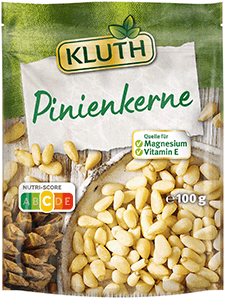 example 100g bag
Main Areas of Cultivation:
Pakistan, China, Spain, Italy, Portugal, Türkiye, Greece, Israel
Quality:
The pine nut is not classified as a nut kernel, but as a seed. The Pinus koraiensis, whose cones contain the developing pine nuts, belongs to the pine genus, scientifically also known as Pinus. It takes up to three years for the pine cones to fully mature, and only then do the first pine nuts ripen. On average, one cone yields about 120 pine nuts. Pine nuts are harvested from wild-growing pine forests, as cultivated pine farming is not possible.
Uses:
Whether raw or roasted, these oil-rich seeds are sprinkled over salads or vegetables. They are also commonly used as a filling for vegetables or in sauces, rice dishes, and baked goods. The best-known recipe using pine nuts is certainly Pesto alla Genovese - a delicious paste made from pine nuts, basil, Parmesan, garlic, and olive oil that goes perfectly with pasta.